
Tripod Turnstiles
Compact controlled lanes for practical staff or visitor entry management.
Entrance Control & Security
Keystone plans, sources, supplies and installs entrance-control equipment for vehicle lanes, pedestrian access, security checkpoints and workforce attendance requirements in Zambia.
Project-based supply
Equipment is not presented as ready stock. Brand, model, specification, availability, pricing and delivery time are confirmed after the site requirement and approved scope have been reviewed.
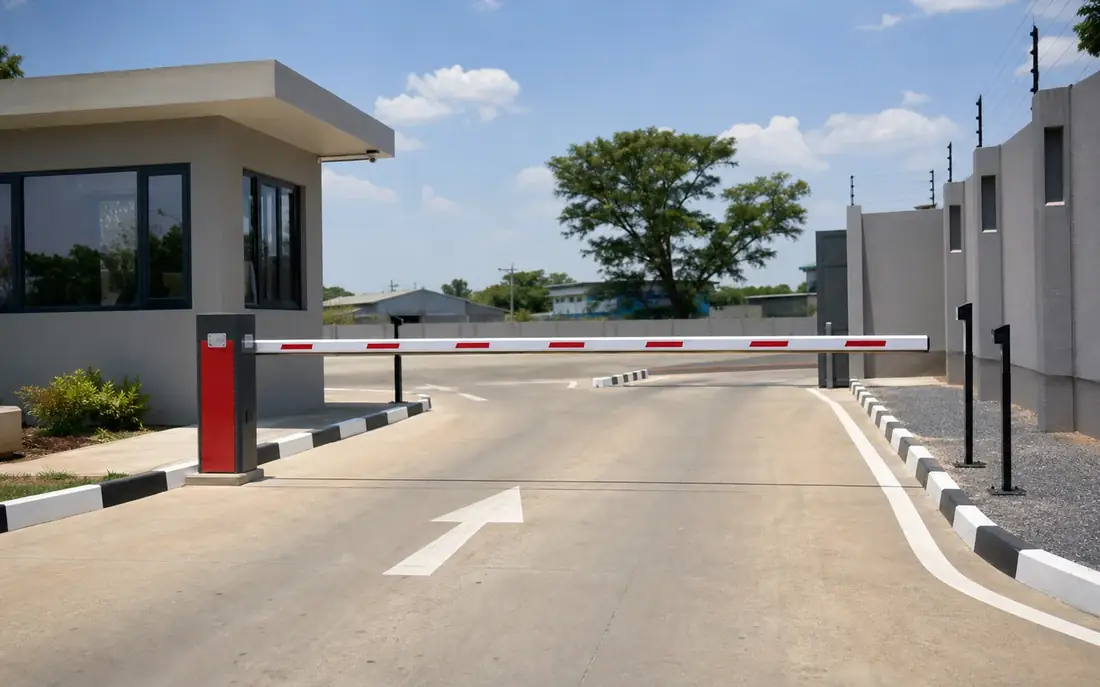
Vehicle entrance control
Automatic boom barriers help organise vehicle access at offices, campuses, industrial facilities, residential developments, logistics entrances and controlled parking areas. Each lane should be planned around traffic volume, opening speed, safety and the method used to authorise vehicles.
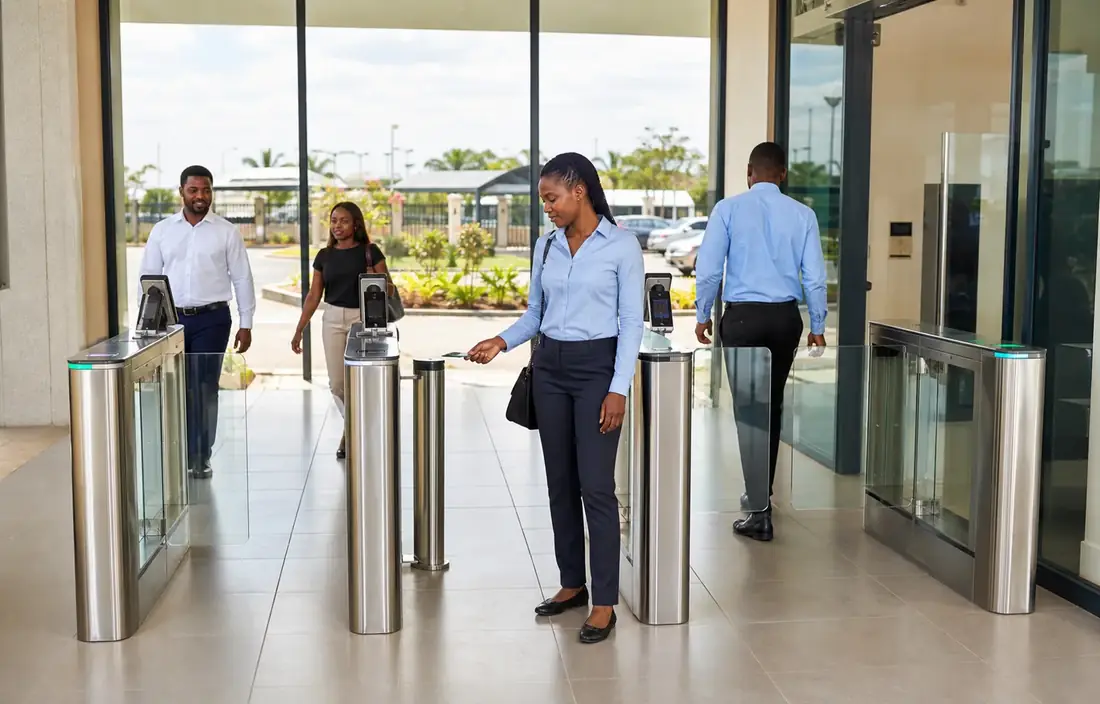
Managed pedestrian movement
A well-planned pedestrian entrance should control access without creating congestion. Keystone can help define separate entry and exit lanes, visitor routes, staff access and wider accessible passage points according to the site's daily movement and security level.
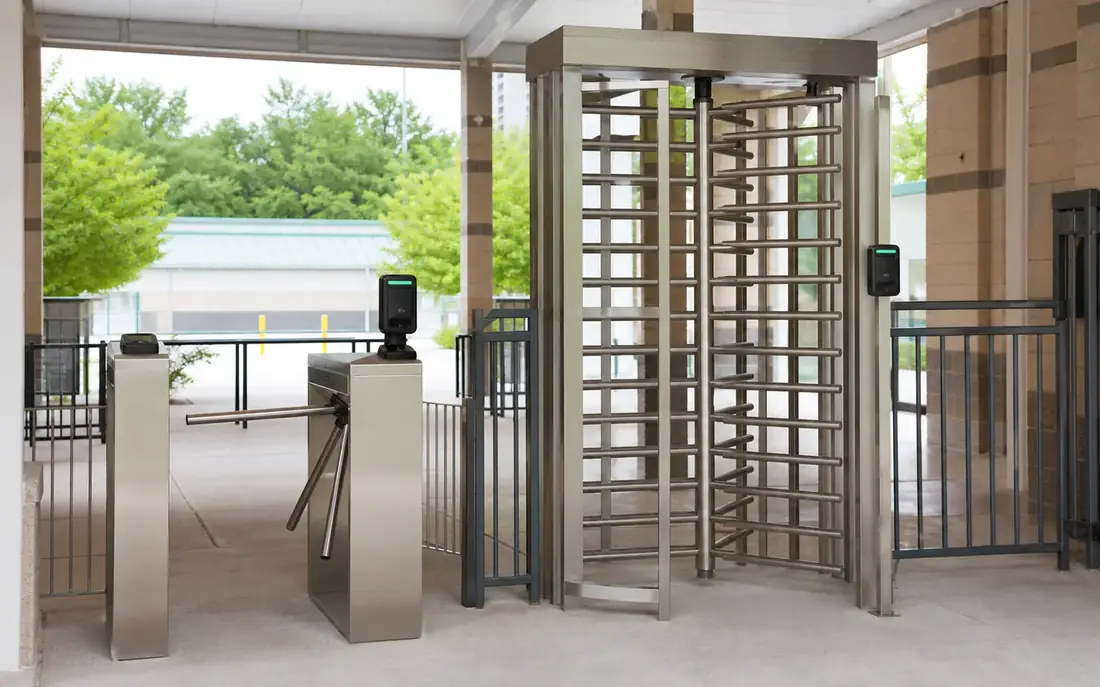
Controlled access lanes
The correct gate type depends on the site's security level, appearance, pedestrian volume, indoor or outdoor location, emergency egress and accessibility requirements. Keystone assesses the entrance before recommending an equipment category and lane arrangement.
Compact controlled lanes for practical staff or visitor entry management.
Higher-control perimeter entrances where unauthorised passage must be reduced.
Faster, presentable pedestrian flow for suitable office and reception environments.
Wider passage planning for wheelchair access, deliveries and authorised movement.
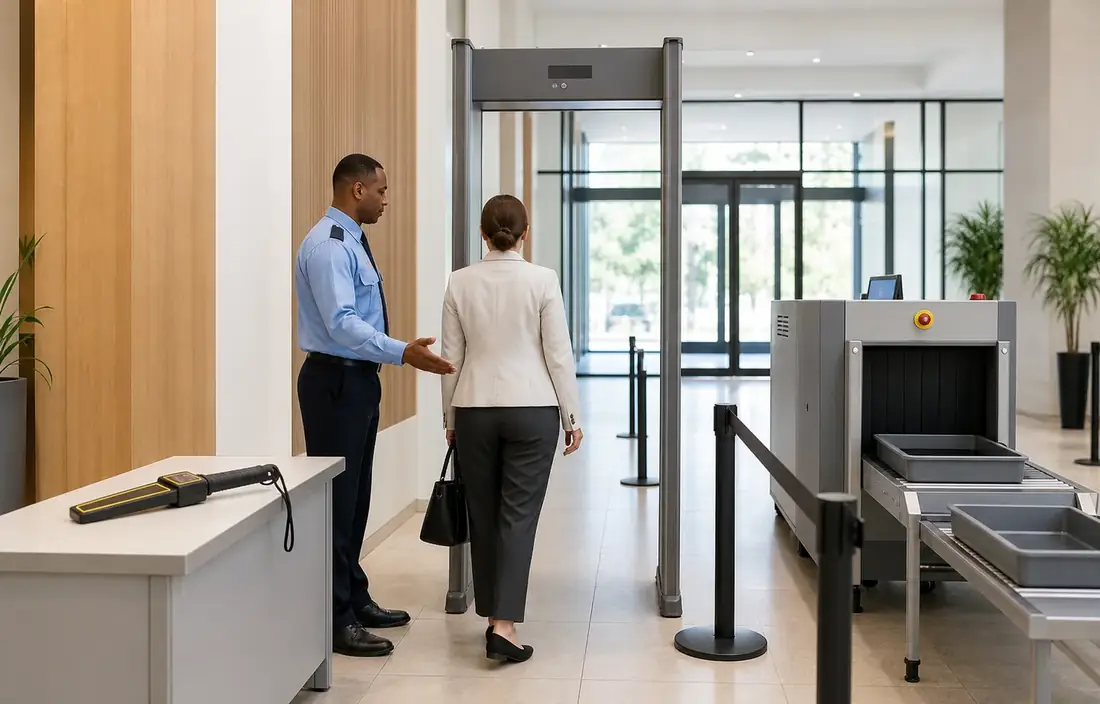
Checkpoint planning
Security screening should be planned around risk, expected visitor volume, available space, operating procedures and trained personnel. Suitable equipment can be sourced and installed after the required detection level and checkpoint workflow are confirmed.
Detection capability, calibration, operating procedures and any specialist inspection equipment must match the approved security requirement.
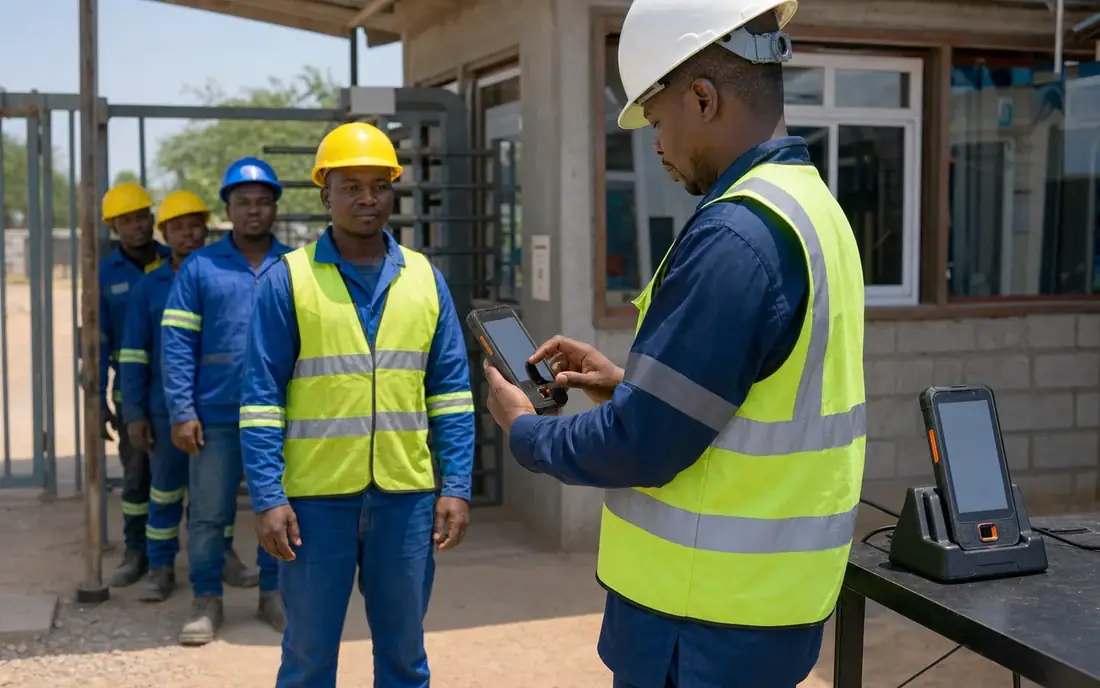
Advanced workforce verification
For distributed teams, temporary worksites and mobile supervisors, an advanced handheld attendance terminal can provide a more practical option than a fixed wall unit. Solutions in the Horus H1 Mobile category may be considered and supplied according to project requirements and supplier availability.
Biometric and employee data must be handled under an appropriate organisational policy, with lawful notice, access control and retention arrangements.
Delivery process
Review the site, movement, risk, utilities and operational requirement.
Define lanes, equipment category, integrations and safety arrangements.
Confirm suitable brands, models, availability, lead time and quotation.
Install, integrate, test, demonstrate operation and document handover.
Connected systems
Entrance equipment performs best when access permissions, video evidence, communications, emergency operation, network connectivity and backup power are planned together.
Common questions
Yes, where the approved design supports it. ANPR cameras, vehicle databases, intercoms, RFID or remote controls can be considered as activation methods.
The choice depends on security level, pedestrian volume, indoor or outdoor use, available space, accessibility, finish and emergency-release requirements.
Yes. A site assessment helps confirm lane dimensions, foundations, power, network routes, traffic flow, pedestrian safety and integration requirements.
No. Equipment references describe possible solution categories. Keystone sources and integrates suitable equipment according to the approved requirement and does not imply manufacturer appointment unless separately confirmed in writing.
Plan the right entrance
Share the location, entrance type, expected users or vehicles, preferred operation and required integrations.